Beyond Awareness: Creating Workplace Cultures Where Advocates Can Thrive
As we close out Domestic Violence Awareness Month, I want to leave us with something to think about.
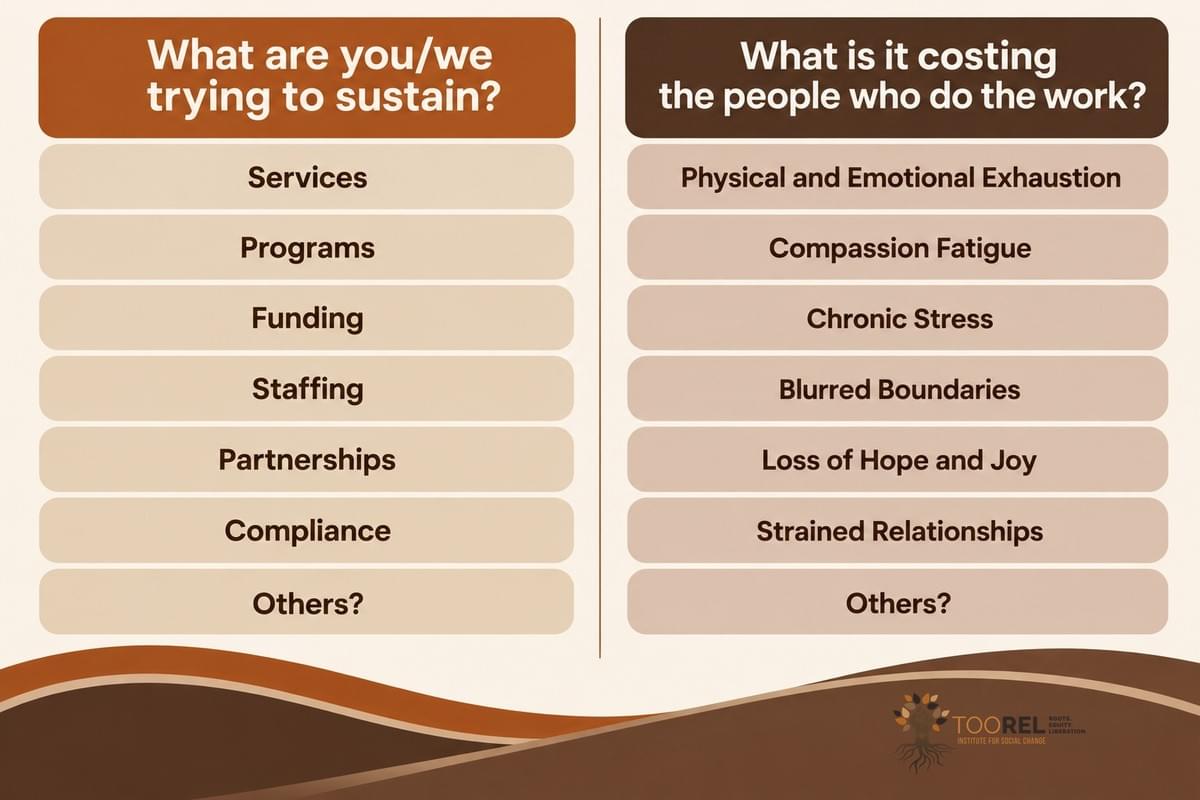
What exactly are we trying to sustain, and at whose expense?
Yesterday, I had the honor and opportunity to facilitate the closing plenary for the Maryland Network Against Domestic Violence (MNADV) Annual Conference, “Rooted in Care: Using the Culture Tree Framework to Build Healthy, Sustainable Workplace Cultures.”
During our time together, we explored what it really means to center people while holding purpose, examined how power shows up in our workplaces, discussed how we can be more intentional about creating workplace cultures where advocates can thrive, not merely survive, and introduced the concept of redefining sustainability. That conversation deserves a whole workshop by itself.
One of the central themes of our conversation was the difference between Power Over and Shared Power, and how these approaches influence our relationships, communication, employee wellbeing, leadership practices, organizational decisions, and overall workplace culture.
Million-dollar question: How can we advocate for safety, dignity, respect, and empowerment for survivors while failing to consistently demonstrate those same values within our own organizations?
We cannot separate the work we do from the culture in which we do the work.
We cannot talk about empowering survivors without examining power dynamics within our organizations.
And we cannot continue asking advocates to show up, as their whole authentic selves, for survivors, communities, and our movement without examining how we are showing up for them.
Looking Inward: The Workplace Cultures We Create
Workplace Culture:
What we see above the surface
What happens beneath the surface
What we hold and reinforce over time
Are we creating work environments where people feel seen, valued, respected, heard, and supported?
Are we creating workplaces where people feel safe enough to speak up, challenge decisions, and share different perspectives?
Are we practicing shared power, or simply talking about it?
Are we holding people accountable in ways that promote care, learning, growth, and dignity?
Are we creating environments where advocates can thrive, or have we normalized cultures where burnout or simply surviving the work is considered enough?
Are we willing to examine the practices, policies, and behaviors that may unintentionally reinforce the very oppressive dynamics we are collectively working to dismantle?
These are not always comfortable conversations. But they are necessary.
Creating healthy workplace cultures requires more than good intentions, inspiring mission statements, or organizational values displayed on a website or a brochure.
It requires us to examine how decisions are made, whose voices are heard, how power is exercised, how accountability is practiced, and whether the people doing the work feel genuinely valued and supported.
Introducing the TooREL Workplace Culture Tree: Power Over and Shared Power
As part of this reflection, I'm sharing the TooREL Workplace Culture Tree: Power Over and Shared Power, a tool designed to help individuals, leaders, teams, and organizations examine how power influences workplace culture.
It challenges us to look beyond what is visible and consider what is happening beneath the surface.
I'm sharing this resource as an invitation to reflect on the cultures we are creating, sustaining, and sometimes unintentionally reinforcing.
My hope is that this resource will encourage deeper reflection, meaningful conversations, and a willingness to examine not only what we do, but how we do it.
A Note About Using This Resource: The TooREL Workplace Culture Tree is one component of a broader framework designed to support facilitated learning, organizational reflection, and sustainable culture change. While we welcome individuals and organizations to review the framework and reflect on its concepts, it is not intended to be used as a standalone resource to facilitate training, organizational assessments, or workplace culture change initiatives without guidance or support from the TooREL team.
Meaningful conversations about power and workplace culture require intentionality, care, and an understanding of the complexities that may emerge. We encourage organizations interested in using this framework to connect with the TooREL team to explore opportunities for facilitated learning, guidance, and support.
When October Ends, Our Responsibility Continues
As October comes to an end, the purple ribbons will come down, the social media campaigns will slow down, and many organizations will shift their attention to the next awareness month, campaign, or initiative.
But the work continues.
Survivors will continue to reach out for support.
Advocates will continue to show up for survivors while carrying their own responsibilities, challenges, and the emotional demands of this work.
And individuals in “leadership” roles will continue to hold the responsibility of examining how decisions, day-to-day practices, and behaviors shape the experiences of the people they lead and serve.
Awareness matters. Our missions matter. But awareness alone is not enough.
As a collective, we must be willing to move from awareness to action, from conversations to accountability, and from good intentions to meaningful and sustainable change.
As I shared during yesterday's plenary, creating healthy workplace cultures is not about achieving perfection. It is about being intentional, accountable, and committed to holding people and purpose simultaneously.
How do we intentionally care for people while also fulfilling our organizational missions?
We must also be willing to examine how we lead, how we share power, how we care for one another, and whether the cultures we are creating truly reflect the values we promote.
So, as we close out #DVAM2026, I leave you with another million-dollar question:
What will you do differently when October ends to better support the people carrying the purpose and mission of your organization?
Because without the people, the purpose cannot be sustained.
People First, Purpose Always.
Onwards Together. Change Begins With You and Me. 💜
- Arlene Vassell, Founding Director, TooREL Institute for Social Change
Contact us: info@toorelinstitute.org